

 DMS
DMS My Sieber
 GOgreen
 Academy
Category: Expert articles

3,500,000 Kilometres Ahead: Why Being a Pioneer in E-Logistics Pays Off
For us, sustainability is not a trend – it is a fundamental part of our solutions business. While others were still weighing up their options, we had already covered more than one million kilometres electrically and gained valuable real-world experience. A look behind the scenes at a fleet transformation that required far more than simply installing new charging points.
Always an Early Adopter: Why We Chose Not to Wait
Today, we deliberately focus on customised logistics solutions – wherever we can make a real difference. We create added value for our customers. And today, that added value is inseparably linked with environmental responsibility.
In 2021, we made the decision to introduce our first electric delivery vehicles. Since 2023, our electric fleet has been in regular operation. Our conviction is clear: economic efficiency and environmental responsibility are not contradictory – they are the logical consequence of doing things properly.
The First eSprinter: From Curiosity to Everyday Workhorse
The first electric Sprinter in our fleet? At first, it was viewed almost like a spaceship. Today? It is as much a part of everyday operations as a pallet in the warehouse. But it was the Ford E-Transit, which we introduced back in 2023, that truly paved the way.
What surprised us: the integration was almost seamless. Technology has now reached a level of maturity where electric mobility is no longer an experiment, but a reliable partner in the demanding day-to-day world of logistics.
The models from Ford and Mercedes prove their reliability every single day and are in no way inferior to their diesel counterparts. The fact that we operate vehicles up to 4.25 tonnes, which can still perform efficiently in last-mile and fine distribution despite the additional battery weight, underlines just how mature the technology has become.
Let’s Be Clear: Without Acceptance, Nothing Moves
It is also important to be honest: there was scepticism. “Will I complete my route?”, “Where can I charge?”, “What happens if I get stuck in traffic?” New technology inevitably raises questions.
Our approach: openness and dialogue. We did not present our drivers, dispatch teams and site managers with a fait accompli. Instead, we involved them in the journey from the very beginning.
The principle: take concerns and worries seriously. At a joint event, we explained the technology, drove the vehicles together and left those initial reservations where they belong: in the past.
The result: once people have driven electric, most do not want to go back to diesel.
Efficient Planning Is the New Refuelling
In the past, refuelling took just a few minutes. E-logistics requires a different mindset. Range, topography – yes, the Swiss mountains are a challenge – and charging points all influence operational planning.
- The reality: sometimes an intermediate charging stop needs to be planned.
- What we learned: our dispatch teams have become logistics strategists who keep charging curves and elevation profiles firmly in view.
- Tachograph challenges: correctly operating the onboard technology in electric vehicles was also part of the learning process for the team.
Infrastructure: Energy on Our Own Premises
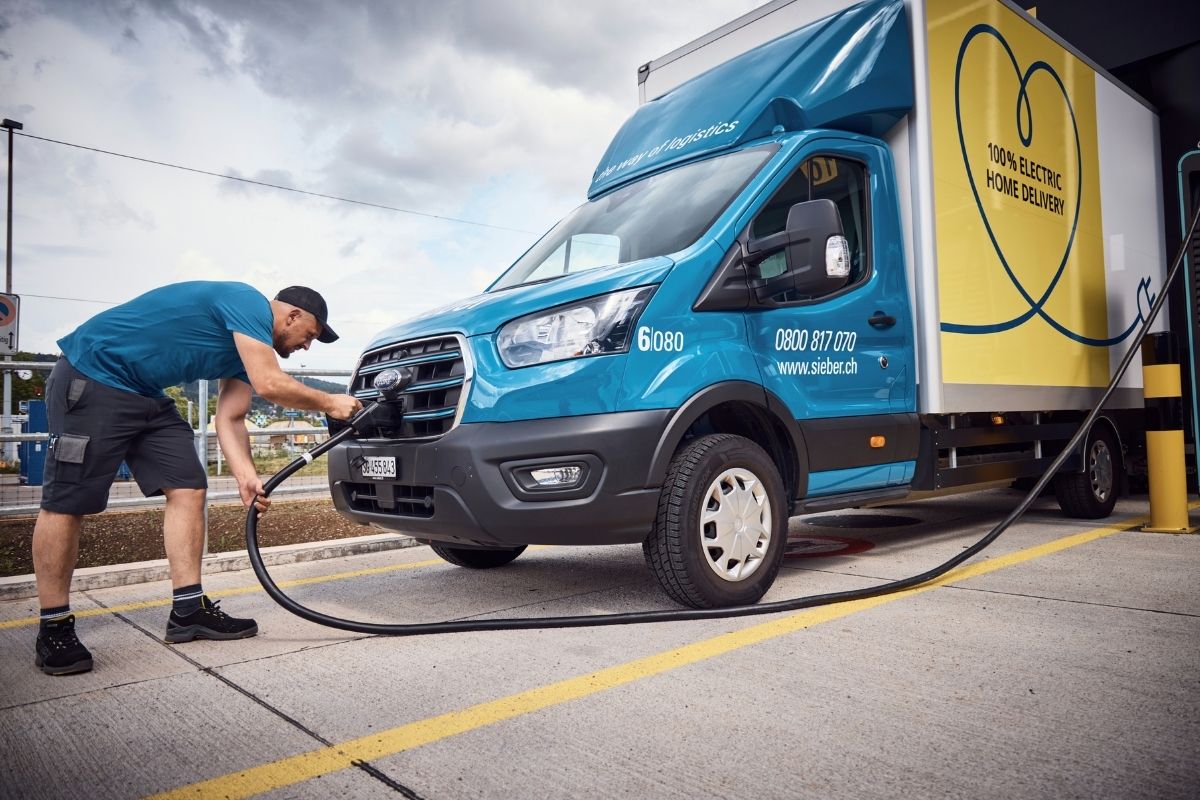
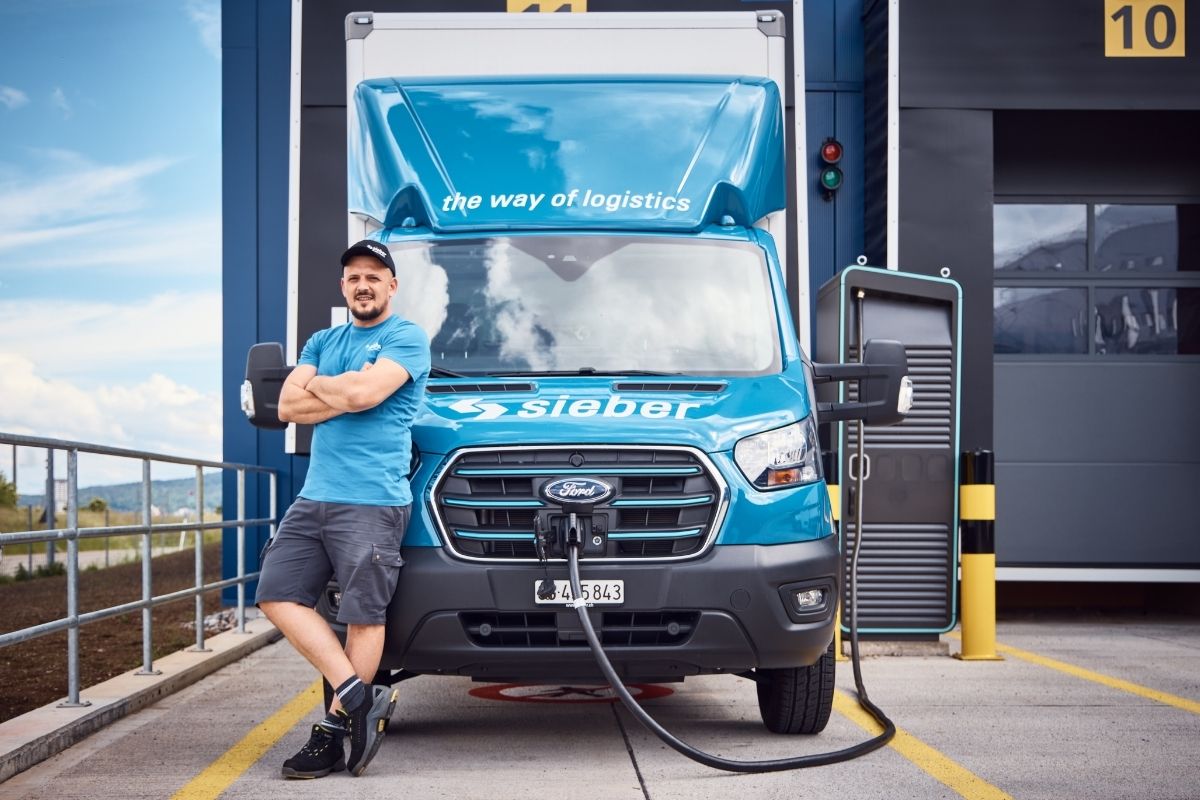
An electric vehicle alone does not make logistics sustainable. Infrastructure makes the difference. We currently operate around 60 charging points with capacities of up to 22 kW. Why not rely exclusively on high-speed charging? The answer is simple: sustainability.
By charging gently overnight, we help preserve the battery cell chemistry. This “Charge-Care” principle significantly extends battery life and increases the number of charging cycles – a crucial factor for the economic efficiency of a fleet that is in demanding daily operation. We charge when the grid is under less strain and when the vehicles are parked anyway.
And when time is tight on the road? Our charging cards give us access to external high-performance chargers with charging capacities of up to 115 kW, allowing us to keep downtime to a minimum.
Numbers That Make Preconceptions Disappear
Let’s look at the numbers: our electric fleet has already saved more than 1,400 tonnes of CO₂. That is the environmental side – but what about the financial side? The figures add up, and very clearly.
An electric motor has significantly fewer wear parts: no oil changes, no gearbox maintenance and substantially reduced brake wear. As a result, maintenance costs are noticeably lower.
Looking at ongoing operating costs, we are currently around 20 to 40% below comparable diesel vehicles. The technology is not a fragile toy, but a robust, low-maintenance solution that proves itself every day in demanding real-world operations.
Anyone who still claims that e-mobility in logistics is merely an expensive hobby simply has not done the maths.
All Good – But What About Winter?
Yes, batteries do not like the cold. But we have a solution for that too: smart preconditioning. By specifically preheating the batteries, we can gain up to 30% more range in winter. Combined with dedicated training for winter operations, we have this challenge well under control.
Looking Ahead: Experience Is Our Most Valuable Fuel
What sets us apart from companies that are only now starting to “find the plug”? It is the advantage gained from hundreds of thousands of kilometres of real-world experience. We have direct contact with manufacturers and continuously optimise our processes based on feedback from our drivers. We know what works on the road – and what does not.
An Honest Conclusion: The Courage Paid Off
Balancing economics and ecology required a great deal of work. There were setbacks, learning moments and periods of scepticism. But that journey is exactly what has made us experts. Today, the technology is no longer the issue – mindset is the key.
We had the courage to move forward as an Early Adopter, and that head start pays off every single day. We are clearly on the right track.

Marco Hartmann is Managing Director of SFL AG and has been closely involved in the development of the vehicle fleet and e-mobility for several years.
He has accompanied the introduction of electric vehicles at Sieber from the very beginning and is familiar with both the technical requirements and the challenges and opportunities of electric mobility in day-to-day logistics operations.
